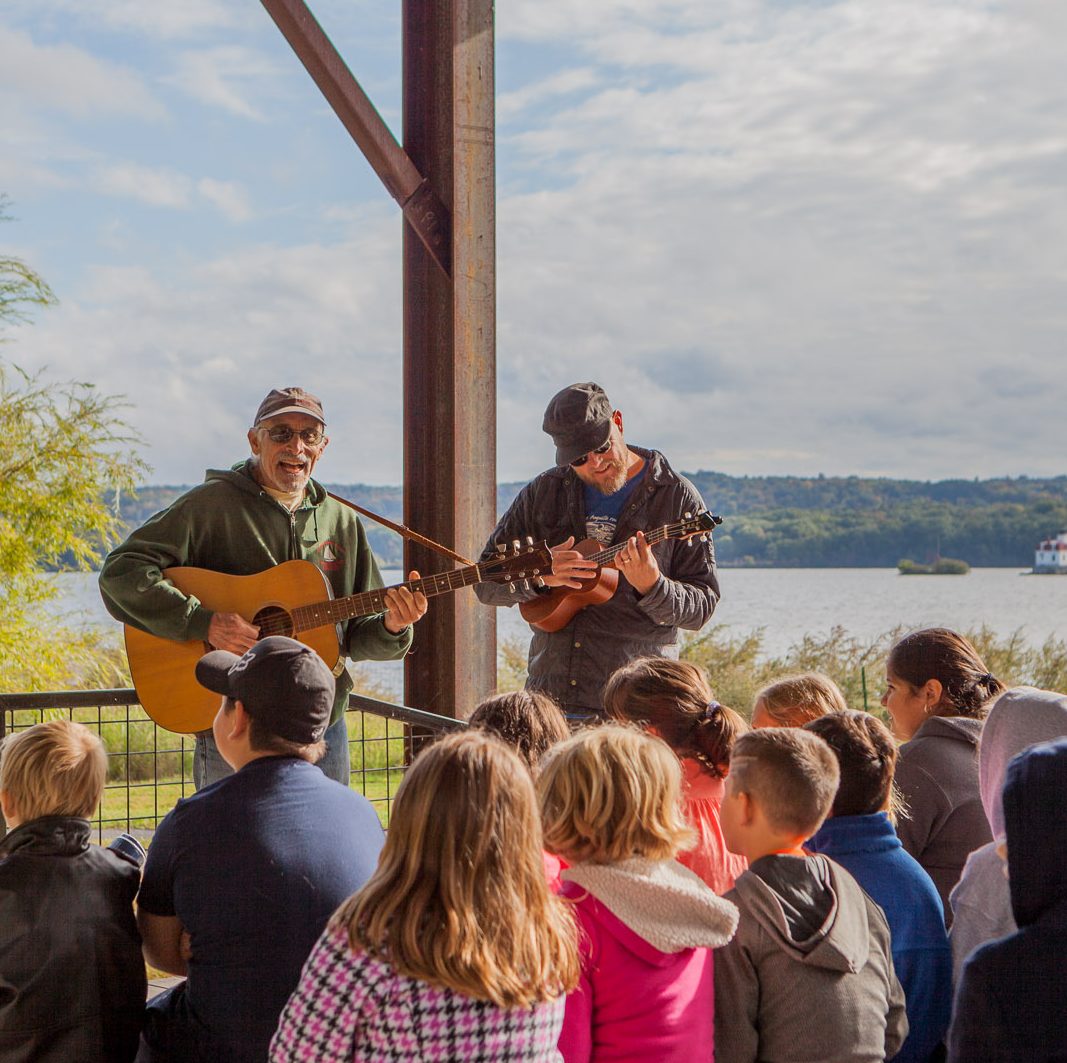
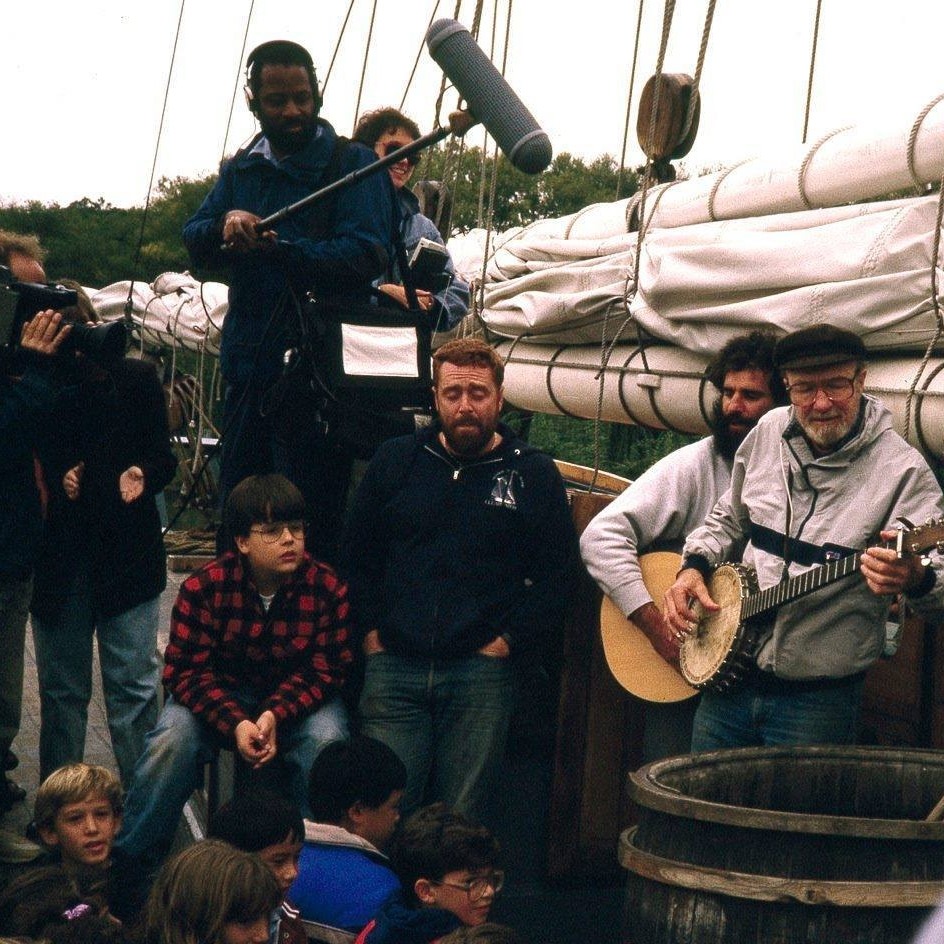
 It may be Pete Seeger and his music. If that is the case it started in 1966 when Pete’s record God Bless the Grass was released. I was a nine-year old Michigander at the Kalamazoo Nature Center summer day camp. My friend Jane had brought in Pete’s record to play at lunchtime and I was hooked. I loved being outdoors and was with people there on the cusp of the environmental movement. Pete’s music fueled us.
Whether we were chasing butterflies, catching frogs in one of the nearby ponds, or picking up litter along the roadsides, Pete’s music drifted through our heads and we sang them with pre-teen abandon. I particularly recall how I loved “The People are Scratching.” Then, about a decade later when I was a college student, I saw the 1974 and 1977 Clearwater and Clearwater II albums at a local record store. They were all I recall having on my Christmas list that year. My folks pulled through and I was introduced to the Hudson and the emerging body of river songs and river singers. This was my kind of music and it was all about protecting the environment.
Pete’s “Old Father Hudson,” “Sailing Up, Sailing Down,” “Golden River” and “My Dirty Stream” along with Tom Winslow’s “It’s the Clearwater” taught me volumes. “You Can’t Eat the Oysters,” Don McLean’s “Tapestry,” and Tom Paxton’s “Whose Garden Was This” became essential parts of the soundtrack of this burgeoning environmentalist and outdoor professional. A few years later I was working at a residential outdoor education center and one of the questions we were all asked for a “meet the naturalists” bulletin board was to name a person, living or dead, that we would like to have lunch with. I wrote, “Pete Seeger.” So, I came to Clearwater through Pete and his music.
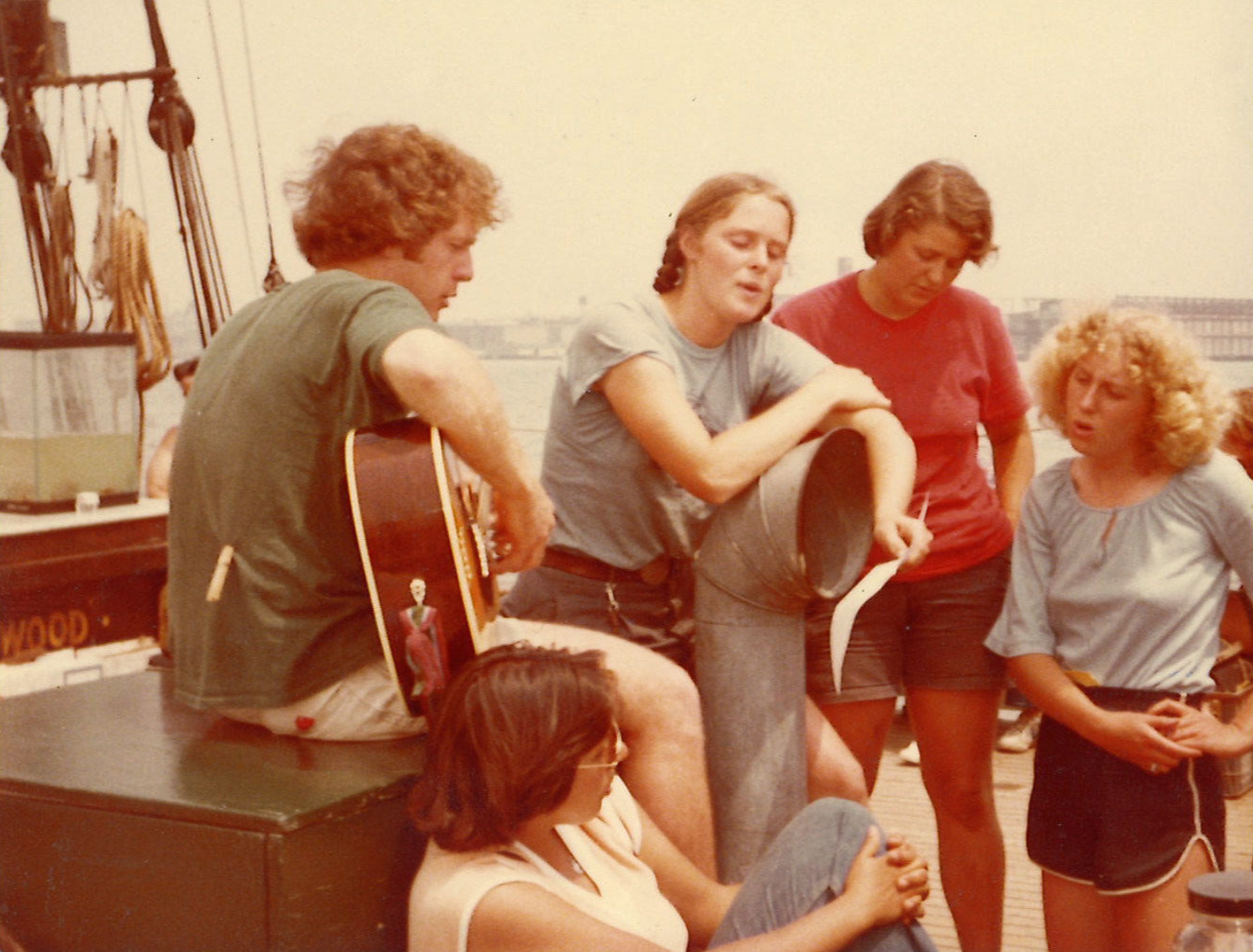
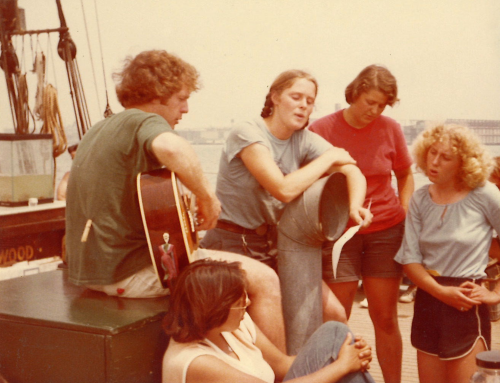
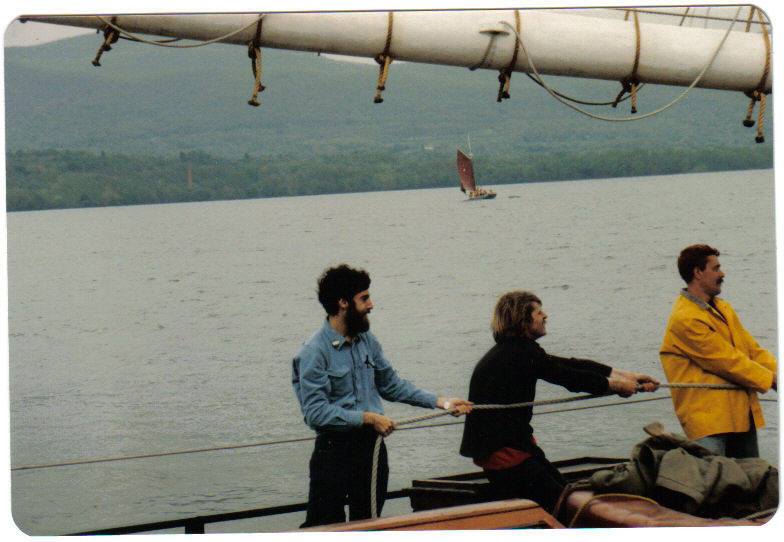 It may also be the boat. For that, fast forward to 1985 and my last semester of graduate school at Antioch-New England, studying for my second degree in environmental studies and education. As I recall it, Steve Stanne, then Clearwater’s Education Director (and an Antioch grad) called one of my professors saying that an onboard educator was needed for the spring. The professor, without pause, said, “I’ll have Brian call you.” I made the call, and was invited to interview in Saugerties. When I stepped on board, and knew immediately I was on something more than a mere boat. A boat with storytelling, windows, and a tiller that implies defiance and solidarity, a deck that is infused with the life of the river and its people, including my hero all in every stitch and line, had me from the start. What I initially thought would be a few months turned into 6 years on board. I learned a little about sailing along the way but always knew it was much, much more.
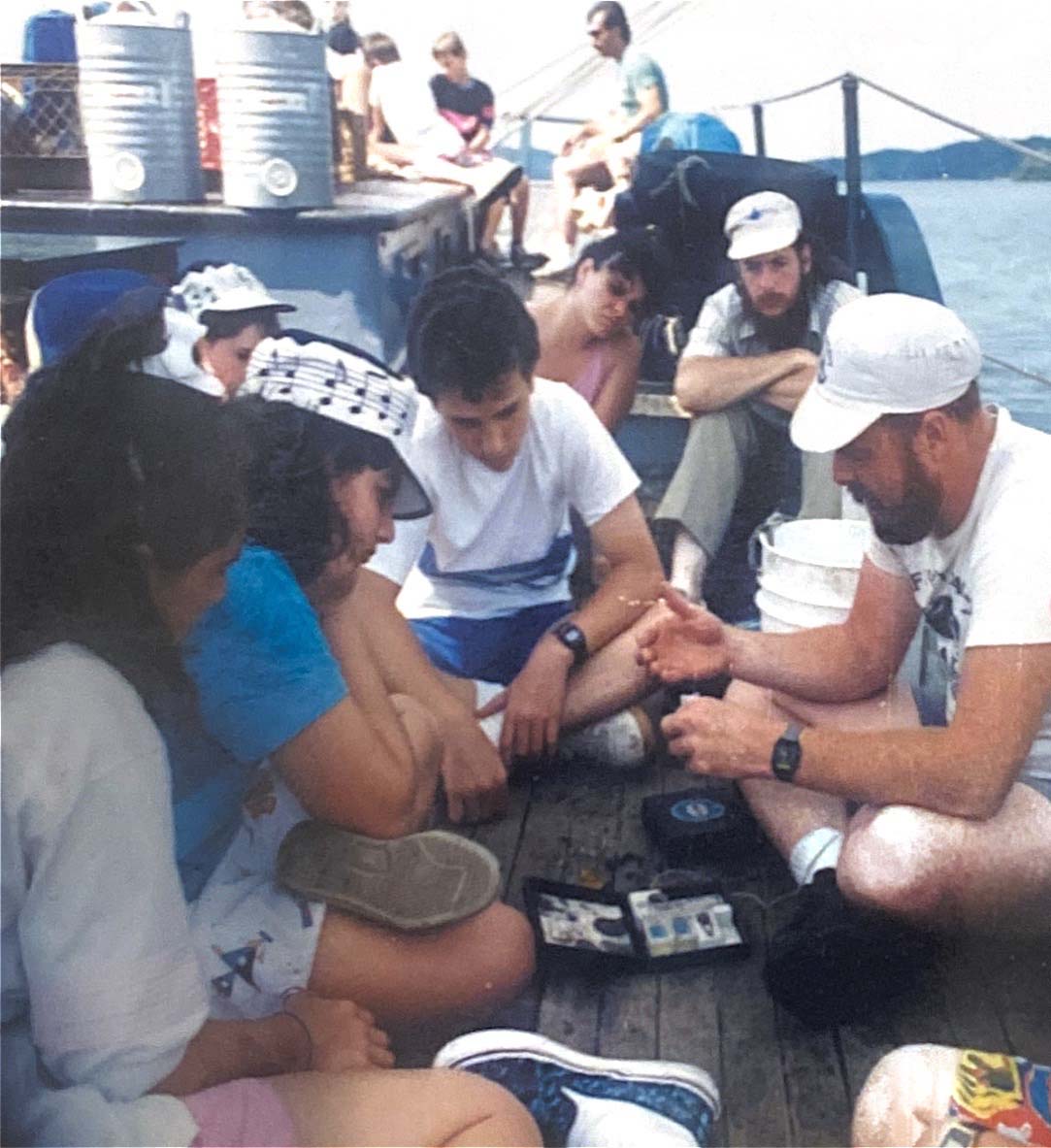 It may be environmental education. I loved my work on the sloop. I learned a lot about fish. I was dedicated to teaching water chemistry, a subject I had never done well in at school…but here there was a reason to understand it. I matured as a spokesperson and as an activist. Clearwater’s environmental action agenda in those years included the fight against landfill on the west side of Manhattan, nuclear-armed warships in New York Harbor, and, of course, GE’s PCB pollution of the entire river system. Coming to know the river, to love it, and to protect it through teaching was a perfect match for me.
It may be the people. I worked with some of the most admirable people I have ever met. Spending time alongside Pete and Toshi remains one of the most significant experiences of my life. There are others too – working under women captains like Peg Brandon, Cate Cronin, and Beth Doxsee unleashed the feminist in me. Being one of the early “out” queer folks on the boat provided lessons in the ways that the personal is always political. The connections, dare I say intersections amongst our identities and concerns taught us about solidarity in action. Under Betsy’s lead, the organization adopted a new anti-discrimination policy. Imagine my joy some years later meeting the amazing Ally Bizer Knox and learning about Clearwater’s Youth Empowerment Programs including Queerwater, a very special experience for LGBTQ folks. I have been able to participate as a volunteer crew member on Queerwater programs in 2009 and 2018. Clearwater’s people amaze me, are my students and teachers, and some of my dearest friends and co-conspirators.
 Perhaps it is all of the above and Clearwater’s relevance to generation after generation of River people. Now, forty years after I became a crew member, I find myself as a faculty member at Indiana University. Clearwater is held near and dear. After conversations with Captains Betsy Garthwaite and Samantha Hicks, I have begun work on an oral history program for the organization. I have the pleasure of working with a second-year undergraduate student who has embraced the project fully. She is now a proud Clearwater member and has filed her volunteer application to sail once the upcoming semester concludes. I feel like my team is winning. With Emma and my other students, I bring some of the spirit of Clearwater to all of my classes. It is present in the constant inclusion of music and stories of sheroes, heroes, and theyroes. Clearwater is present in a sense of optimism akin to Pete’s “Oh Sacred World.” I follow his model and plant seeds of hope, dedication, optimism, activism, and kindness. These are Clearwater’s values that are as firmly set in me as the life of the Hudson is in the timbers of our beloved sloop.
About Brian:
Brian Forist (he/him/his) holds a Ph.D. from Indiana University (2018), an M.S. from Antioch University New England, and a B.S. from Huxley College of the Environment at Western Washington University. He has worked as an interpreter, environmental educator, and researcher in national parks and other protected areas for four decades, including six year on board the Hudson River sloop Clearwater. He now teaches and coordinates academic programs in Parks, Recreation, & the Outdoors at Indiana University. His time with the National Park Service has included work in nine units of the National Park System as well as service as a senior research associate with the Social Science Program in the Washington, DC Office. He is a natural and cultural heritage scholar and interpreter. He has specific expertise regarding park visitor engagement through visitor-centered, two-way, dialogic communication and resource interpretation. Dr. Forist is active nationally in regard to LGBTQIA+ representation and engagement in the outdoors and outdoor professions.
For almost sixty years, Clearwater has nurtured a deep and abiding love for the Hudson River because of the generosity of donors like you. Help us keep the Clearwater magic alive and the sloop sailing for the next generation.